CODE-DE Lab – The National Platform for Earth Observation Data

CODE-DE Lab

CODE-DE Lab is the national platform for the provision and processing of Earth observation data in Germany. As a central infrastructure, CODE-DE Lab is funded by the Federal Ministry of Transport (BMV) and the Federal Ministry of Research, Technology and Space (BMFTR) as a joint project.


CODE-DE Lab builds on its two predecessor projects, CODE-DE and EO-Lab, and ensures the long-term availability of the platform, through which a vast repository of Earth observation data can be searched, accessed, analysed and processed.


  • Secure: CODE-DE Lab runs on a BSI-certified cloud environment that meets the highest security standards.
  • Free of charge: All services are permanently and entirely free of charge for users.
  • Exclusive: Infrastructure resources are reserved for German public authorities and the academic community (expansion is possible if required).

Upcoming Events

Data availability

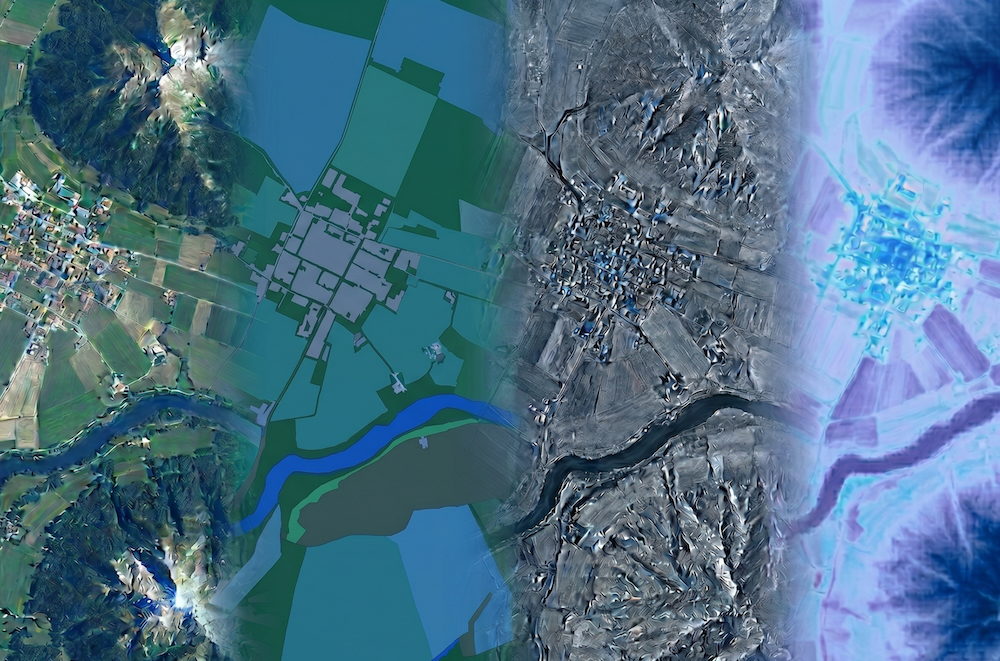
CODE-DE Lab is aimed at public authorities, scientific institutions and research organisations that rely on high-quality, up-to-date and traceable Earth observation data. It offers access to a wide range of data sources, including 


Data access & interfaces

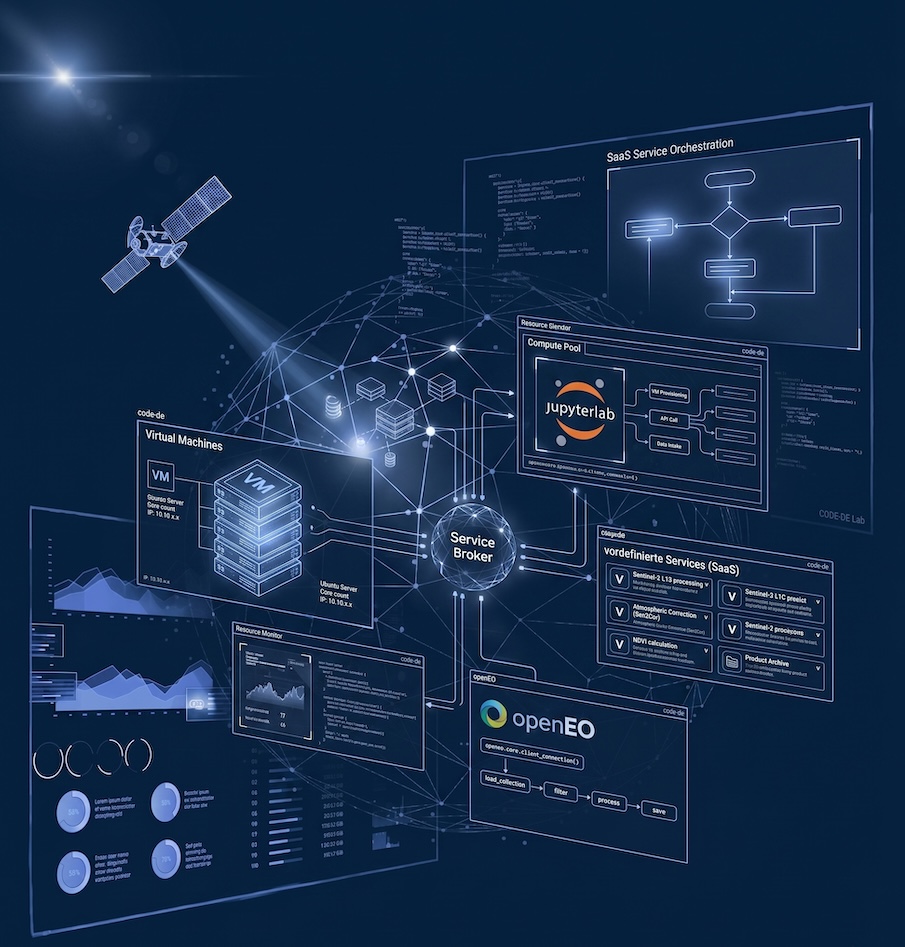
Based on state-of-the-art technology, the platform offers a cloud infrastructure specifically for processing remote sensing data. Extensive computing resources and a variety of tools are available for experts as well as for beginners and occasional users.

The Data Explorer enables straightforward, intuitive data searching for most datasets on CODE-DE Lab. The data can be downloaded directly and prepared for further processing. The Workspace offers pre-defined processors for data analysis. 

The Enhanced Data Viewer allows you to explore data visually directly in your browser. It also includes basic analysis tools, and the visualisations can be exported. (Available from Q4 2026).

Data can also be retrieved via Application Programming Interfaces (APIs) and made available for use in your own applications, both within and outside CODE-DE Lab itself.

The data portfolio provides an overview of all datasets available on CODE-DE Lab, including descriptions, references and notes for each data product.

Data Processing Options

A range of scalable tools is available for analysing and processing data, suitable for every purpose.

JupyterLab provides a flexible, user-friendly, browser-based environment for data analysis. CODE-DE Lab also offers the opportunity to use JupyterLab in teaching.

OpenEO supports the creation of standardised, scalable process chains via an API and a web interface. This works both in the browser and via clients such as Python, R and JavaScript. (Available in Q3 2026)

Users can also apply for their own processing quotas. With the help of virtual machines, they can develop their own complex workflows and integrate CODE-DE Lab’s computing power into their own environment. Thanks to GPU support, AI methods can also be utilised.

A range of applications is available for the public sector, specifically designed to carry out certain administrative tasks, such as in the fields of traffic or environmental monitoring. These are straightforward for public authorities to use and bring Earth observation directly into day-to-day administrative work.

Support and training

To ensure that Earth observation data is as easy as possible to use on CODE-DE Lab, the platform offers a comprehensive range of support and training services.

Our support team is available every day from 9 am to 5 pm by phone, email and via the CODE-DE Lab ticket system. The support team is your first point of contact for any questions or assistance regarding the use of CODE-DE Lab.

Comprehensive documentation makes it easier to use CODE-DE Lab. The ‘Getting Started’ guide and the ‘Frequently Asked Questions’ section help you get started.

We regularly host webinars on CODE-DE Lab to explain various aspects of the platform. We cover a wide range of topics, from the basics and specialist subjects to discussions between users. All webinars are recorded and can be watched afterwards.

Do you know the CODE-DE Newsletter ?
Subscribe